About Project
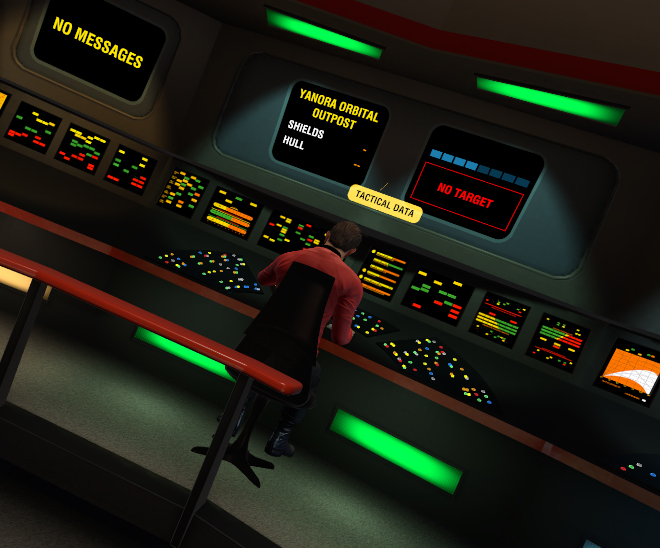
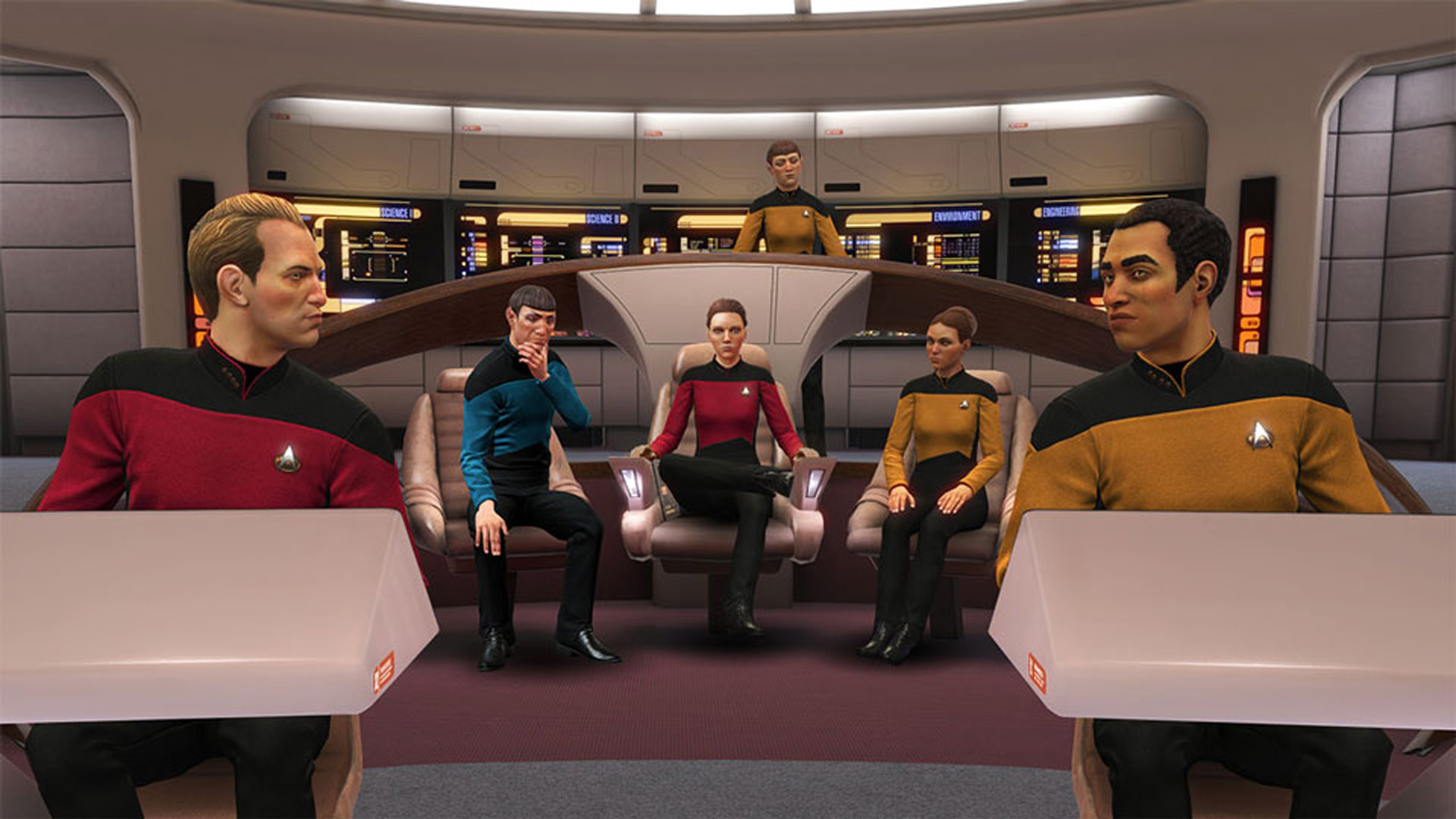
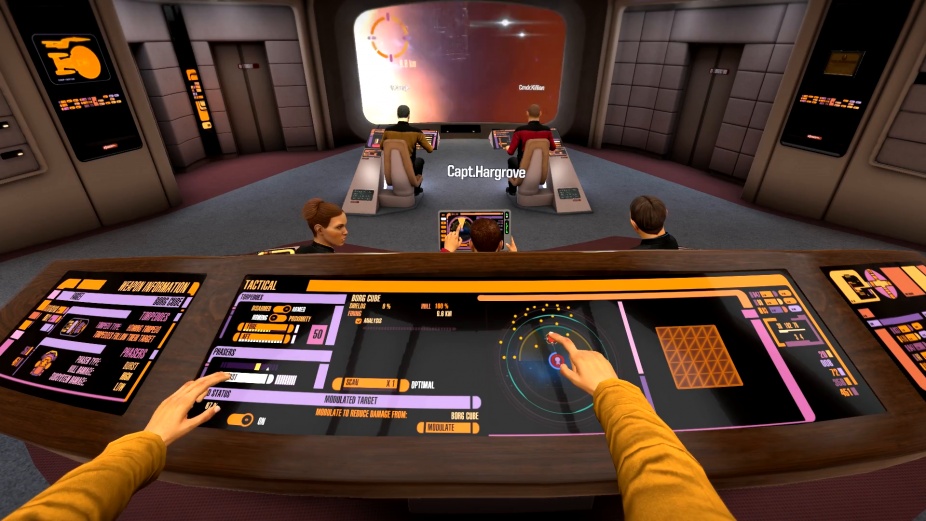
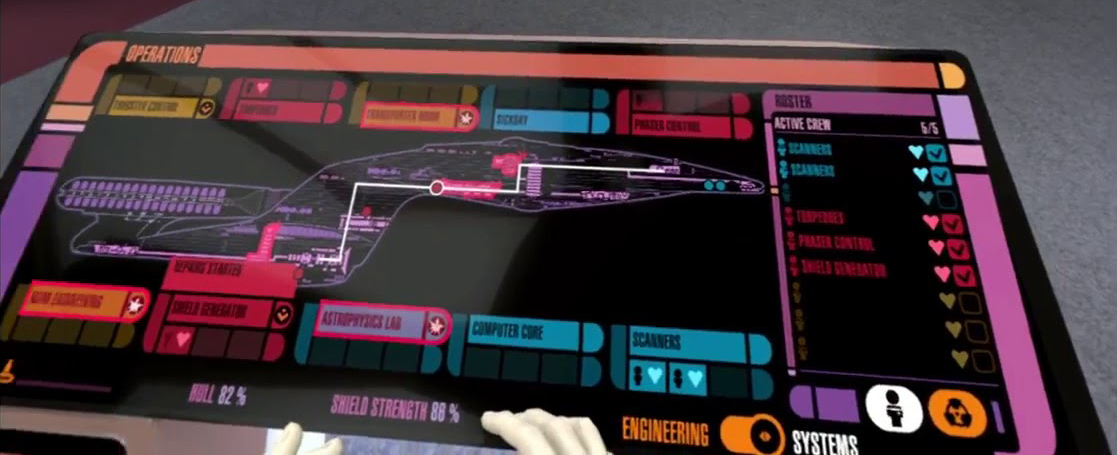
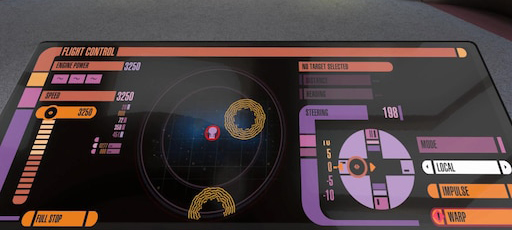
- Star Trek : The Next Generation is a DLC of Star Trek : Bridge Crew and it is pretty much similar to the Aegis bridge with regard to the captain, tactical officer, and helm positions, but Engineering has been totally overhauled.
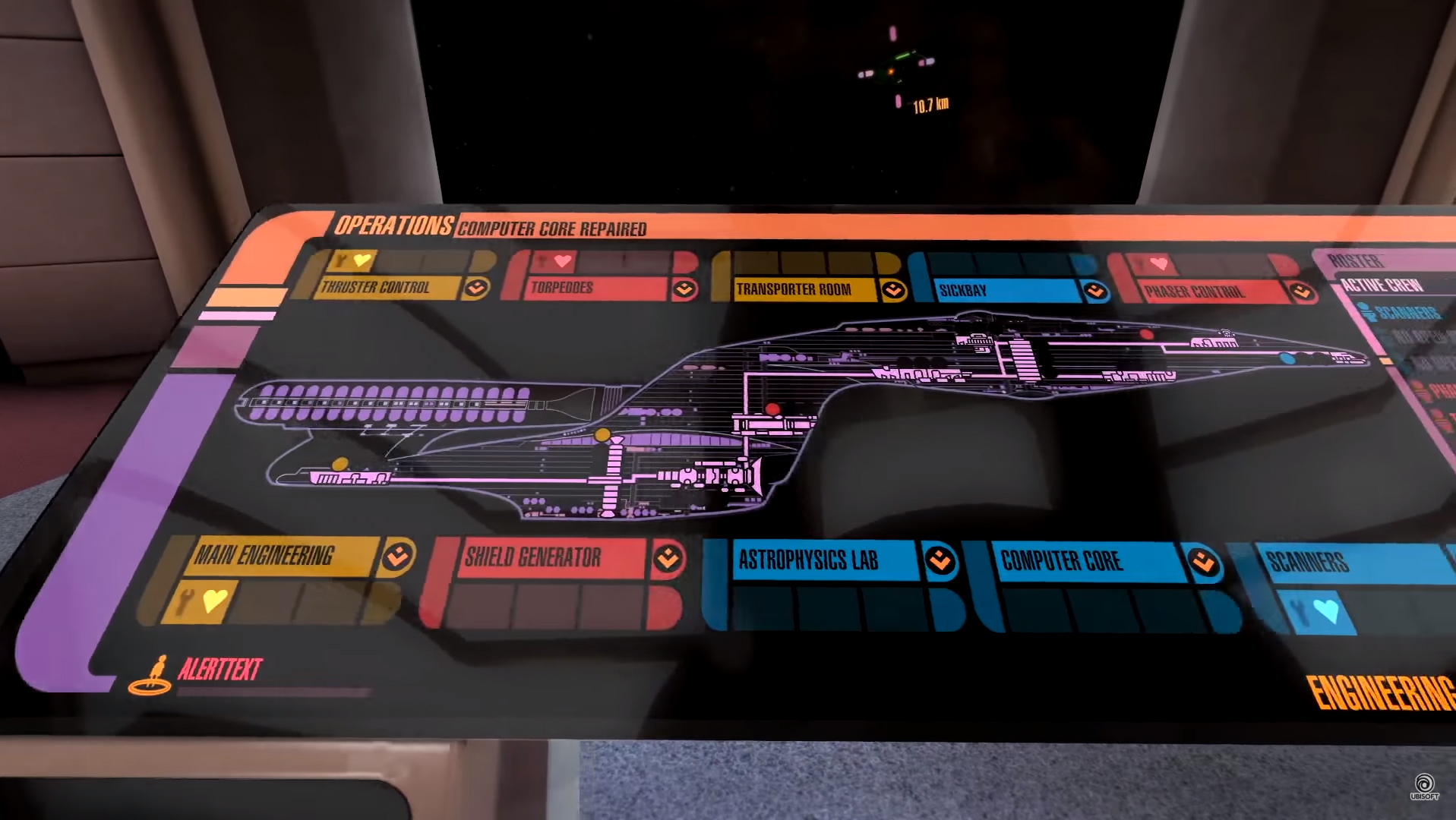
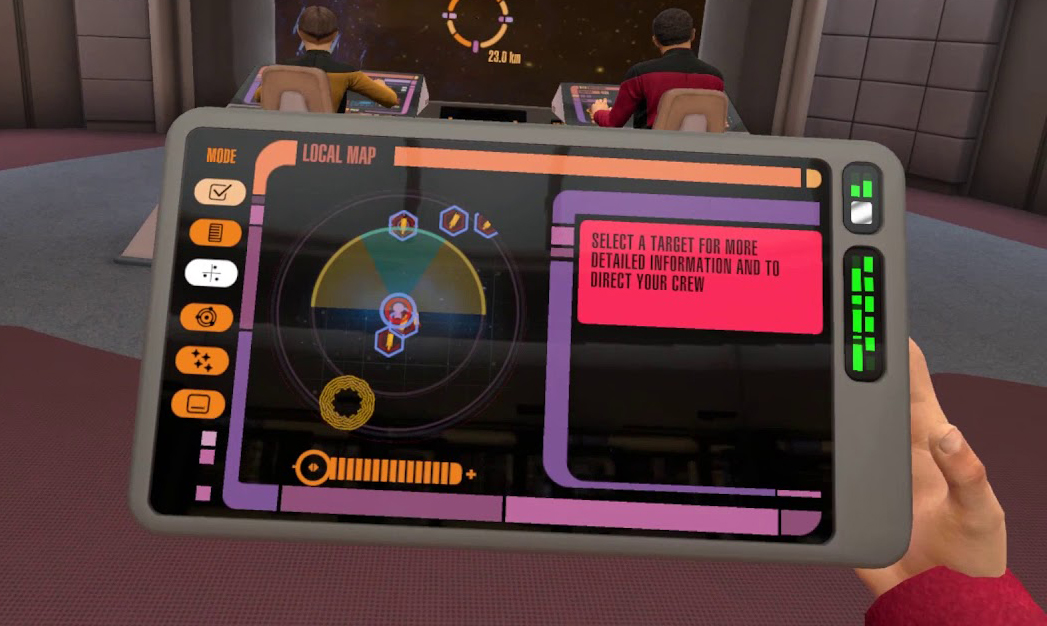
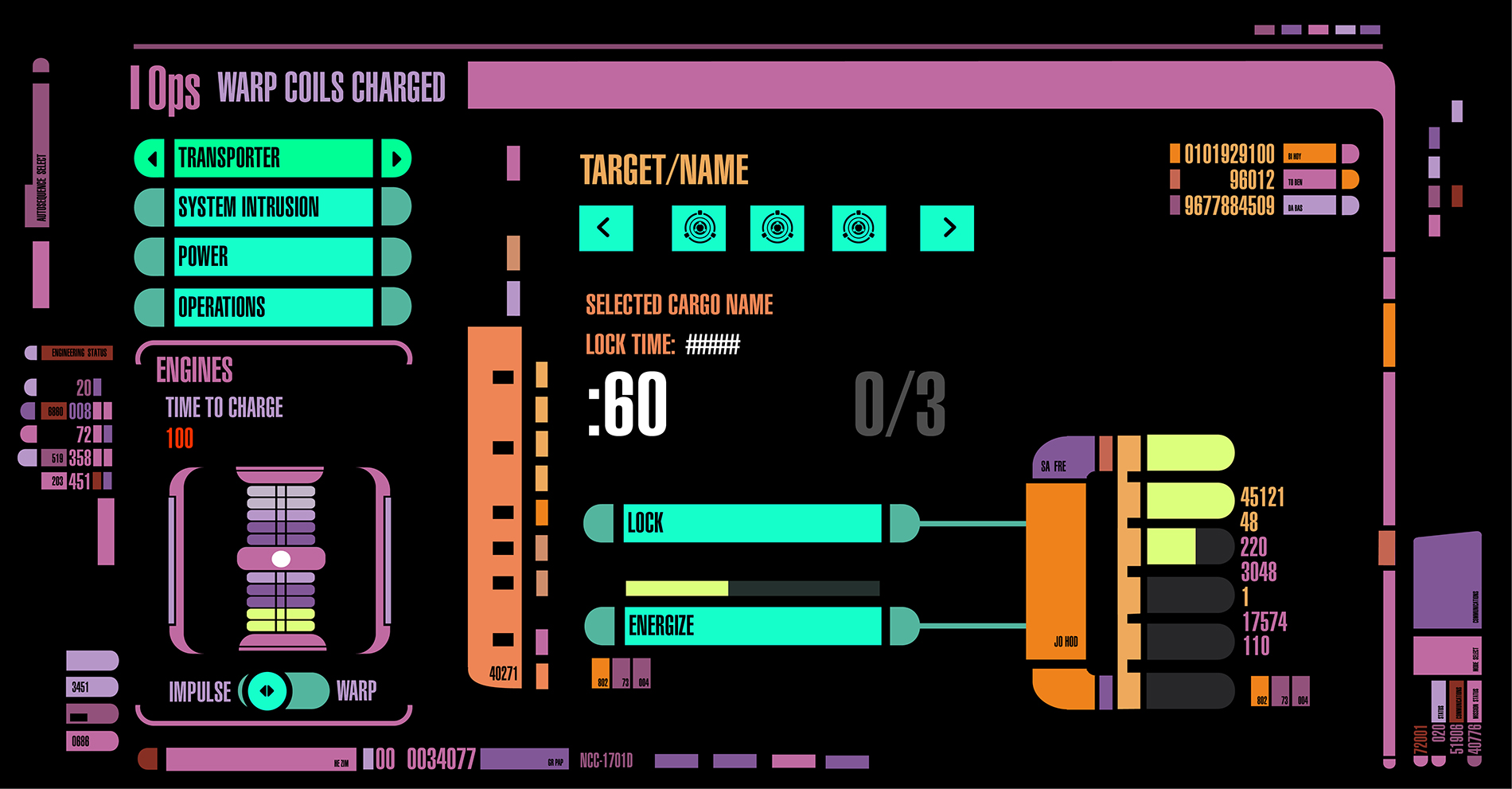
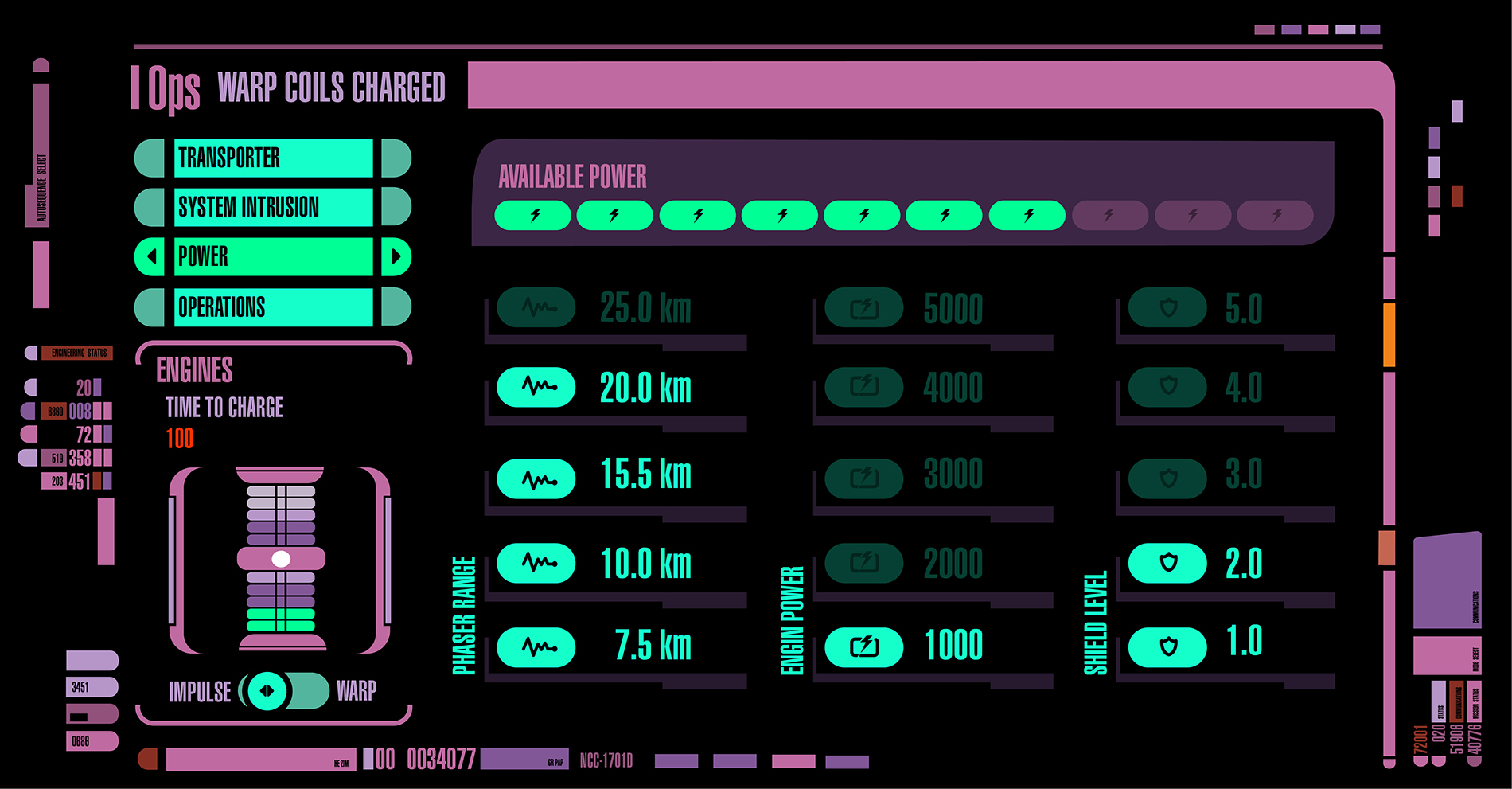
- In the Ops role, you’ll not only have to do all of Engineering’s job through re-routing power to different subsystems, charging warp coils, and transporting things onto the ship, but now you’ll also have to manage the NPC crew across the entire ship to send them out to different areas and start repairs.
- The Enterprise D can be used in any of the existing Ongoing Voyages modes, plus the two new modes. Players appear in authentic TNG uniforms when on this bridge, and experience the full audiovisual treatment to make everything look and sound like the TNG show.
Role
- Lead UI & UX Designer Manage UI/UX Team tasks and UI requirements, Communicate with team leaders,
Participate in UI planning meeting, create wireframe, flow, final assets and Implementation
Challenge and Discovery
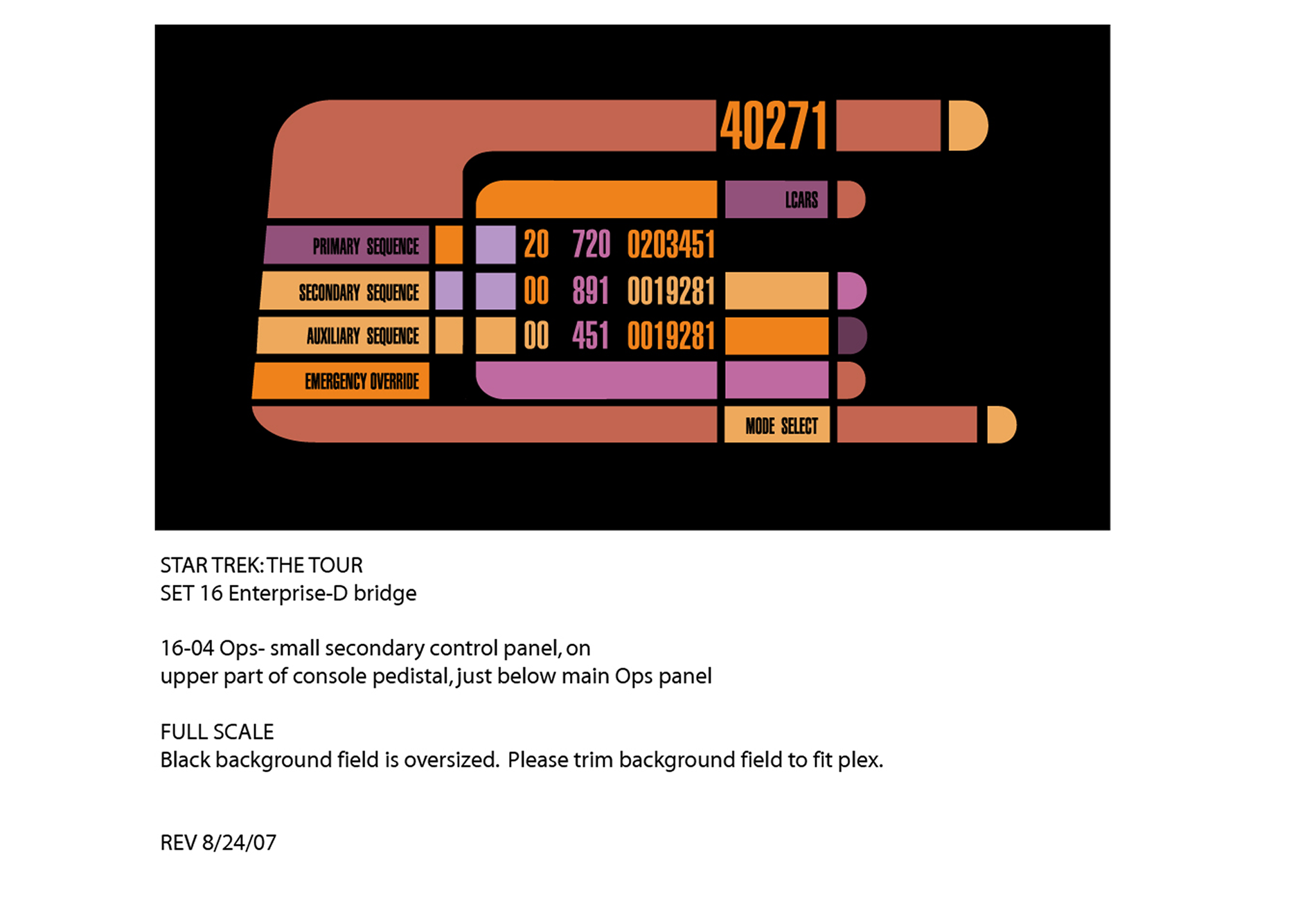
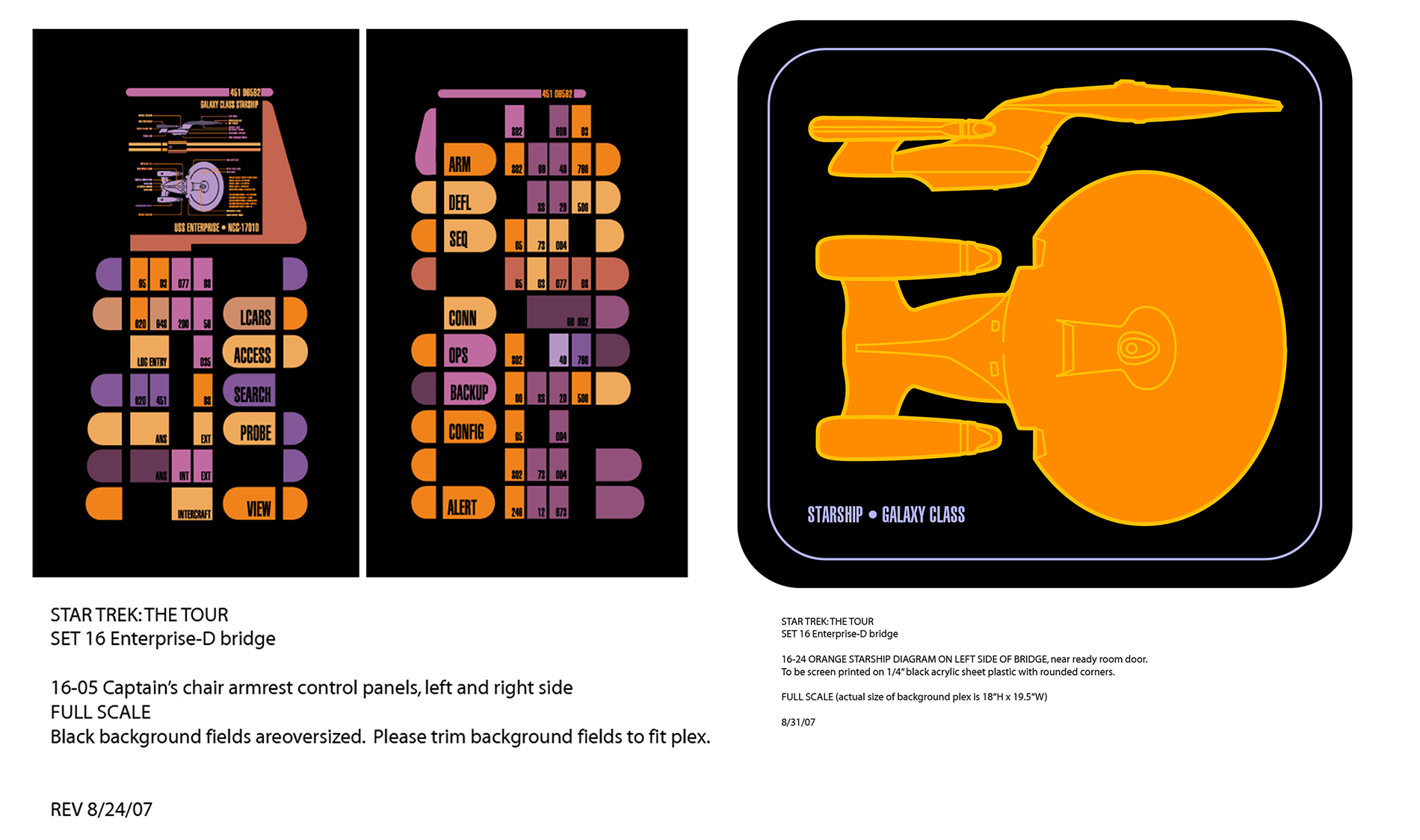
- Authentic Star Trek TNG visual must be maintained in game world.
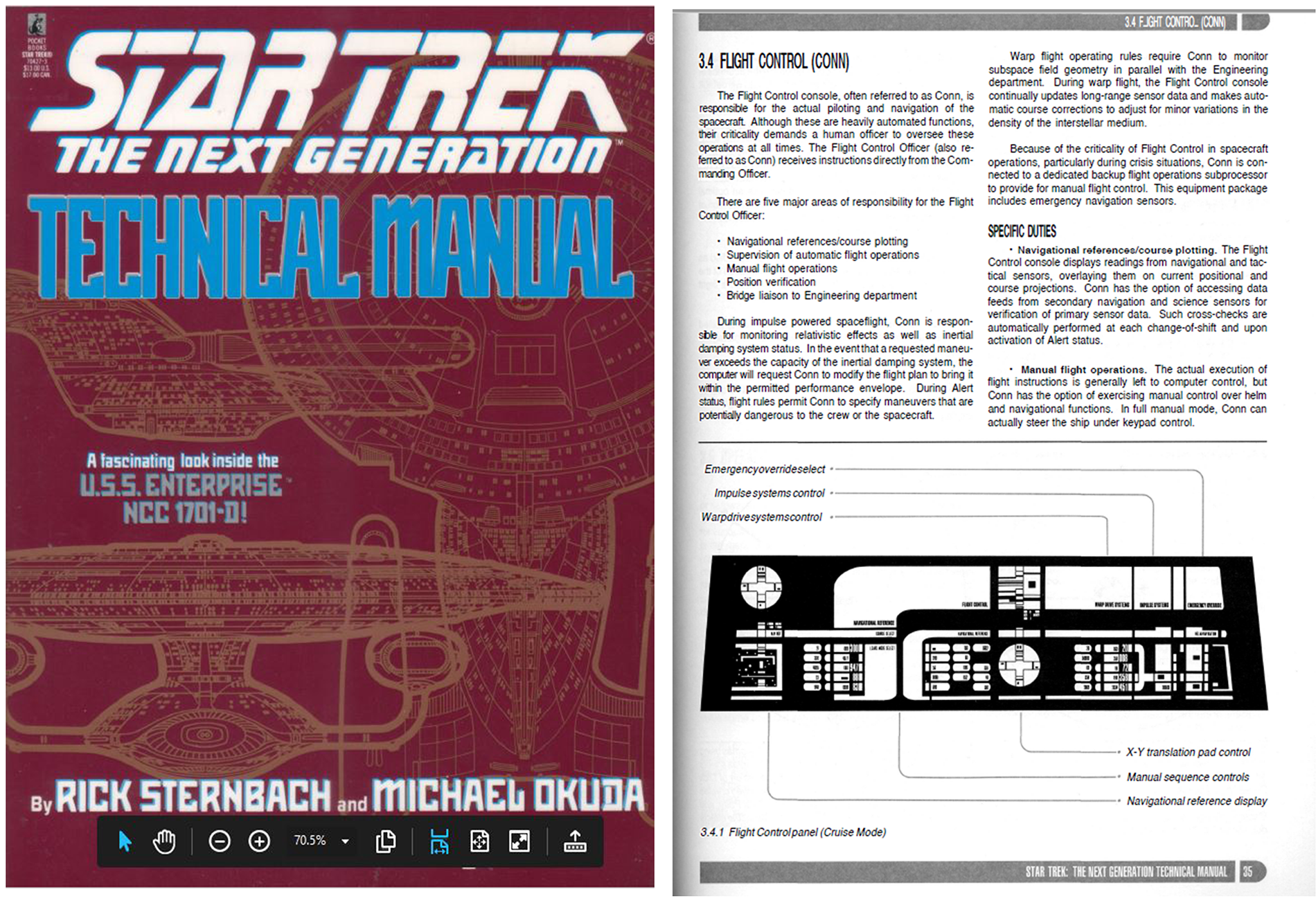
- Player UI interaction mechanic must follow the Star Trek TNG Franchise Technical Manual
- Multiple approval process delays the development of process (Include Ubisoft higher up, CBS and Star Trek art creator Michael Okuda)
- Unity was not set up probably for UI from the beginning
- Ubisoft Barcelona which partner developing with the Red storm have only engineers and 3d artists (No UI/UX designers)
- Working TNG was really fun, we had enough VR Knowledges by then. We had focoused on balanced the game play and performance.
Research
-
ll>
- Study the Star Trek TNG Technical Manual book and previous TNG video as well as Fan LCARS art
- Meet up with Michael Okuda with early mockups
- Make sure to keep all authentic operation UI
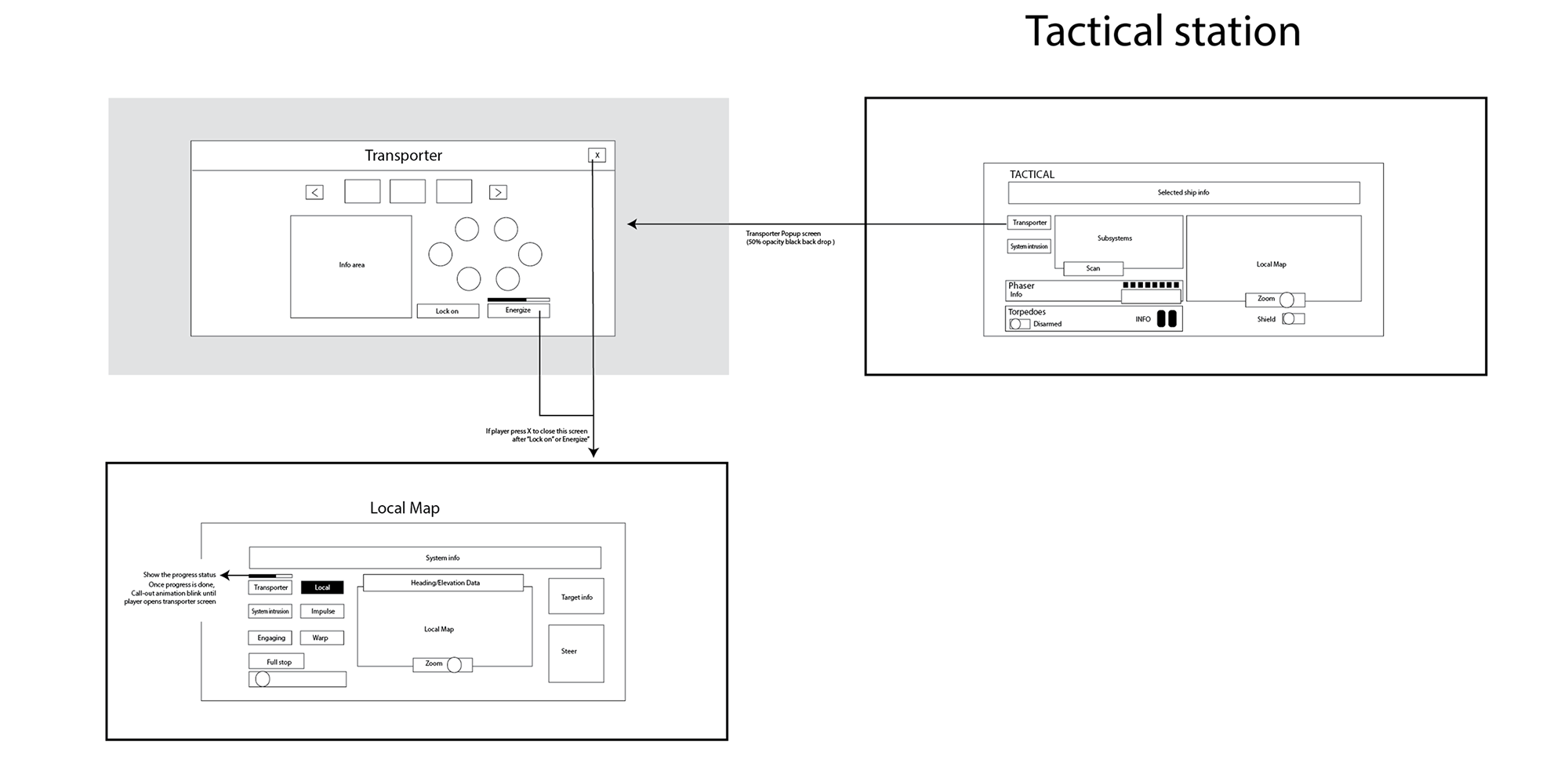
Flow, Wireframe and Prototype
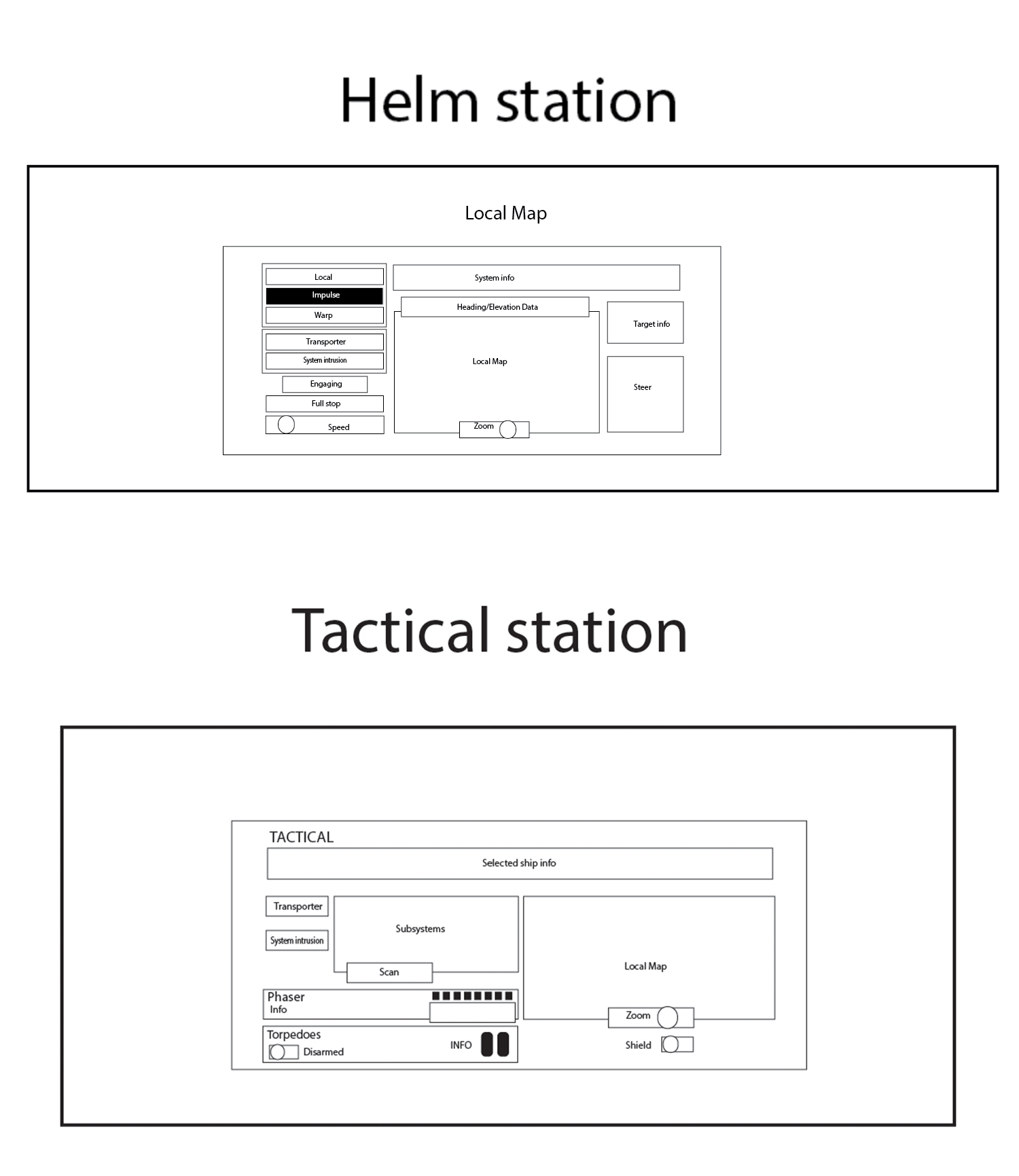
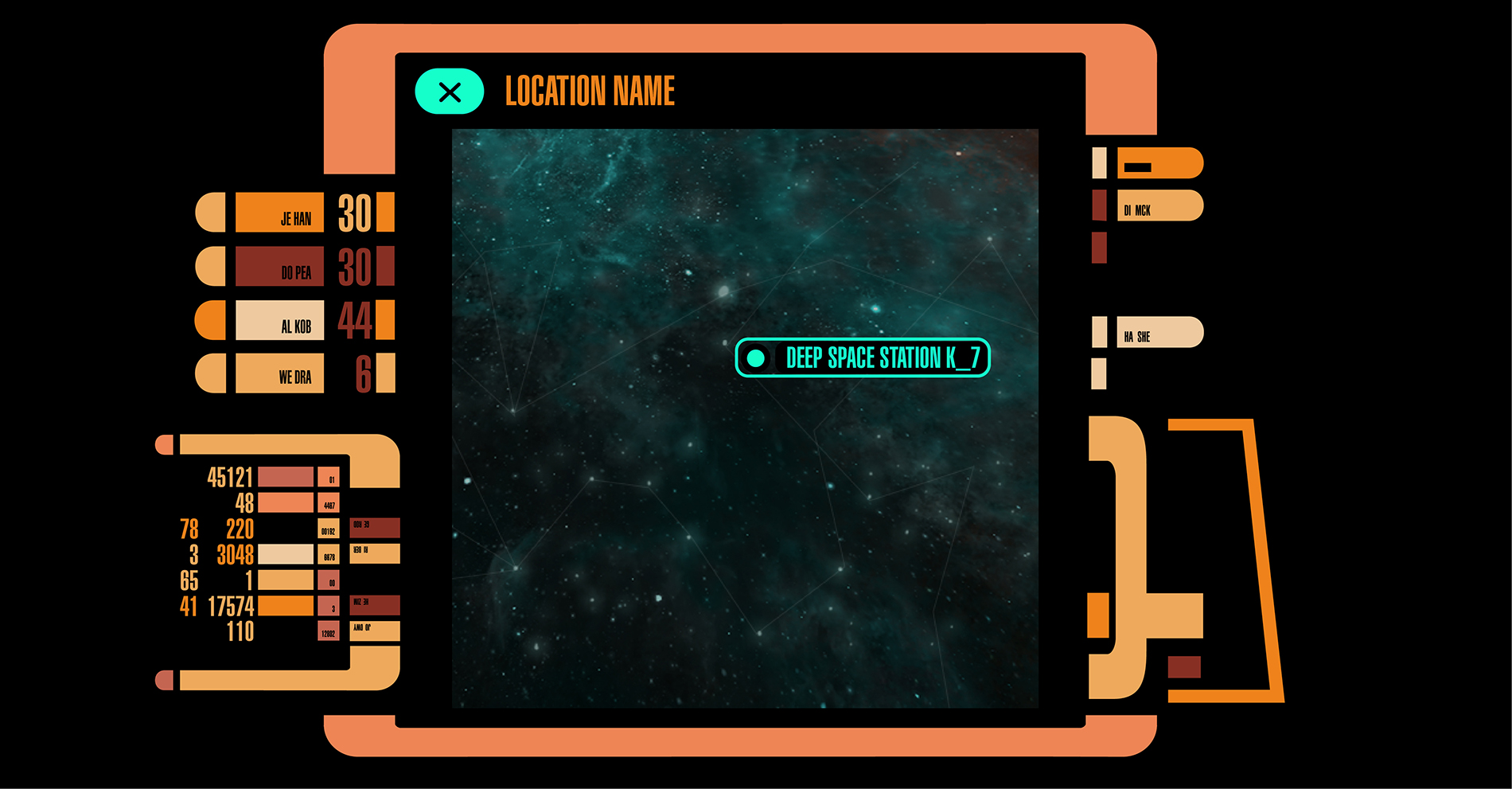
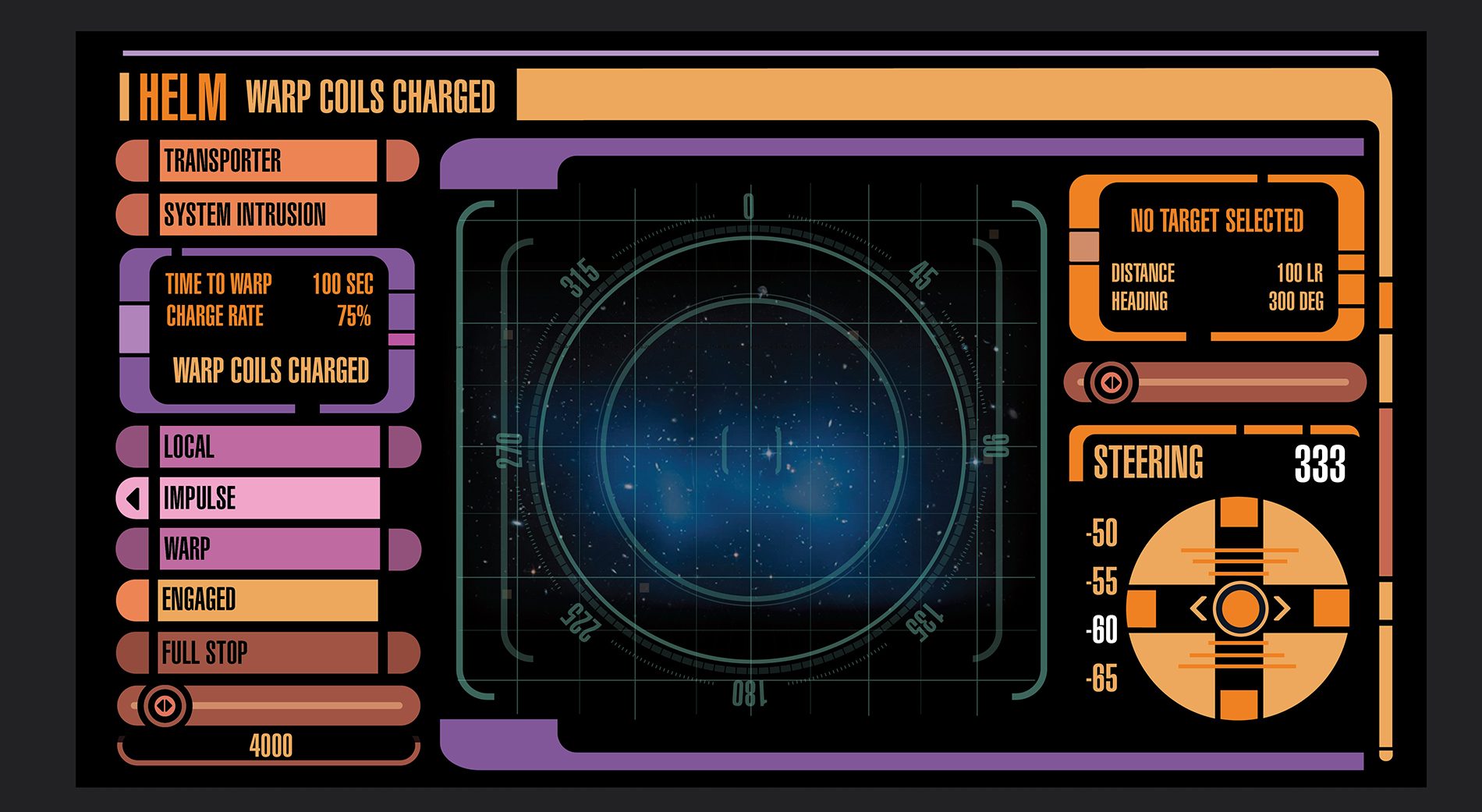
- Each station had to communicate by operating their station and feedback was important for each players knowledge. They can talk but we made sure the show which station official doing what.
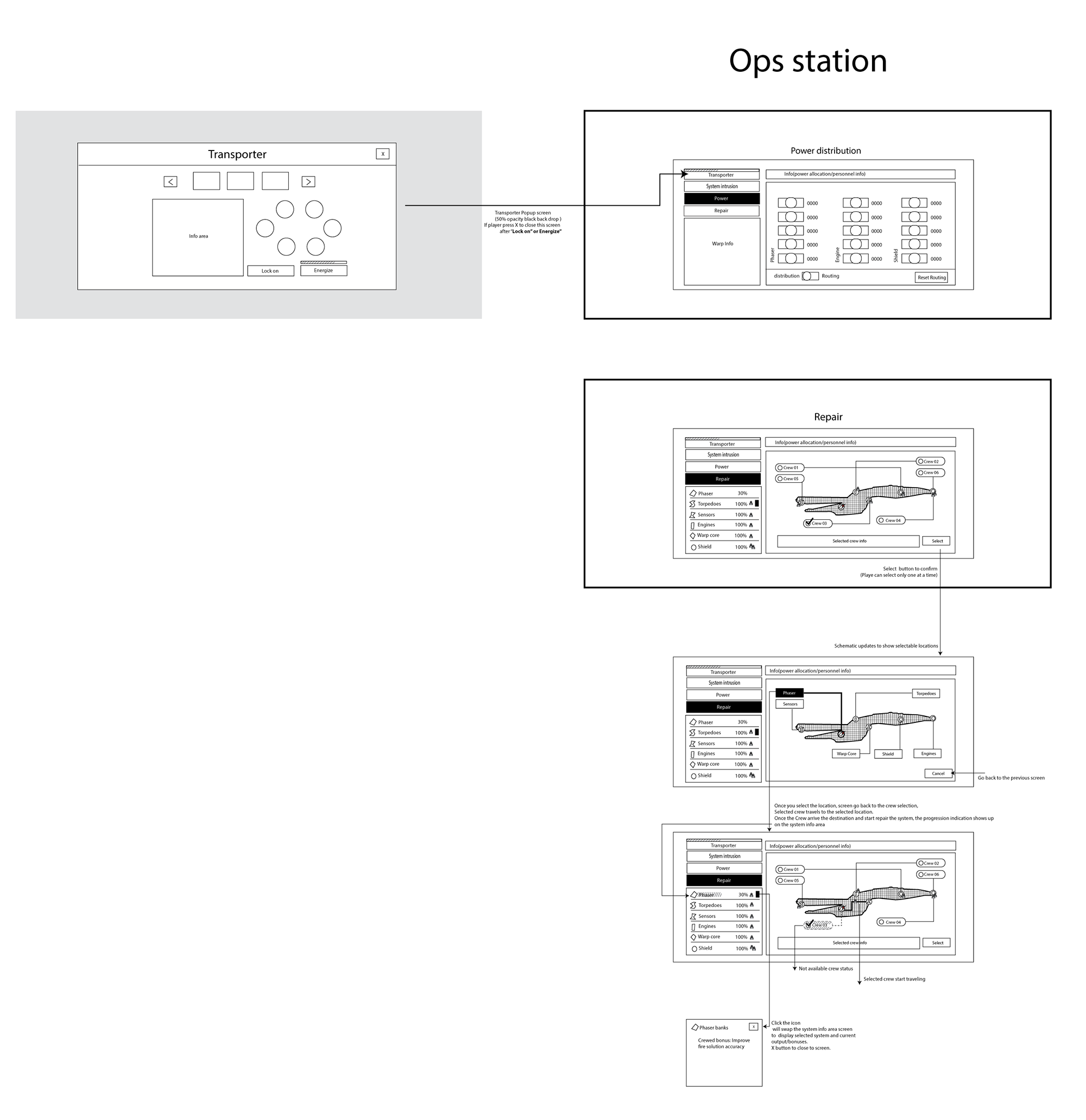 >
>
Style guide and design
- We worked with Michael Okuda through the entire TNG development..
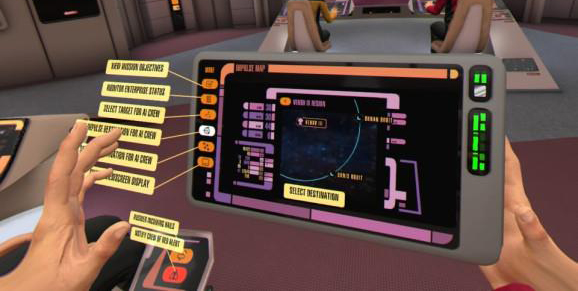
- One of challenge was the interaction was still clunky in VR : Various test with the interaction area size difference and location also distance helped us to determined how to solve problems
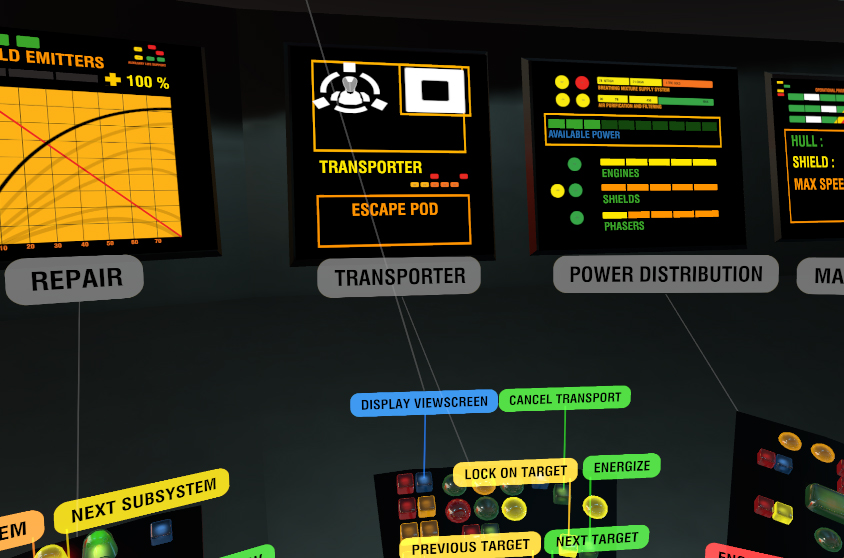
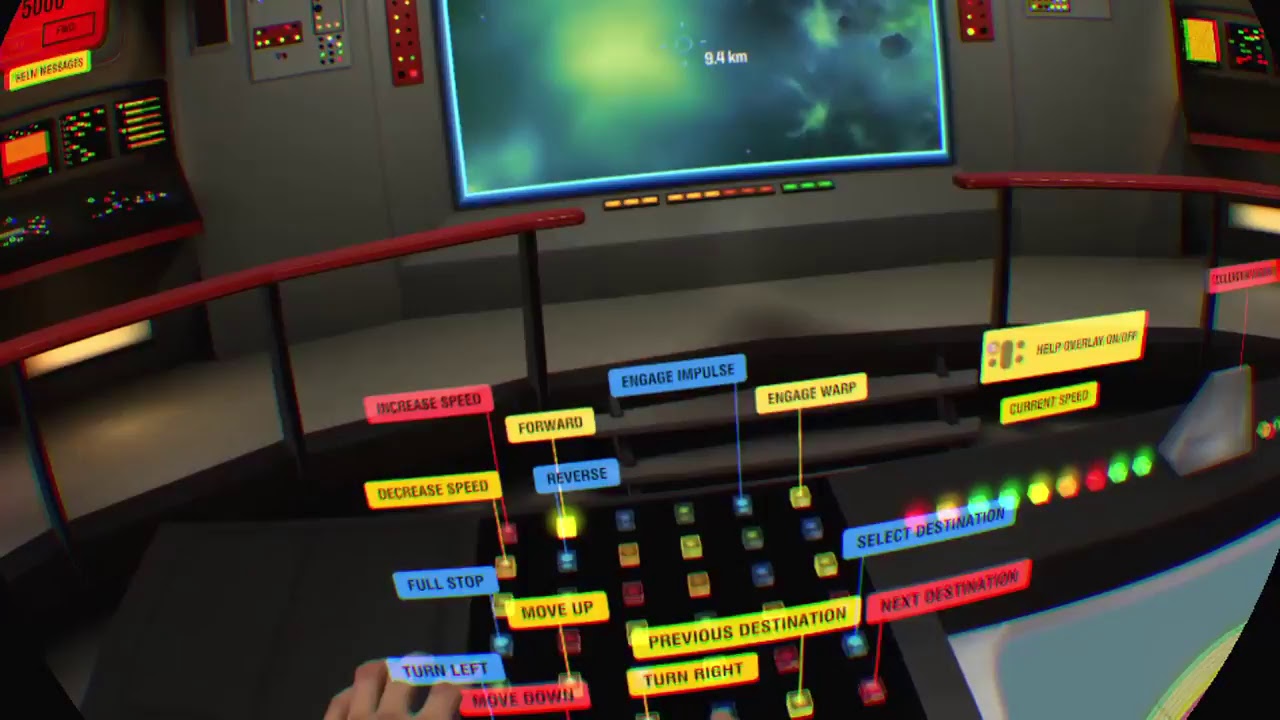
- Often Interaction area was not clear from the decals, we added labels on each interact button to help fresh eye players.
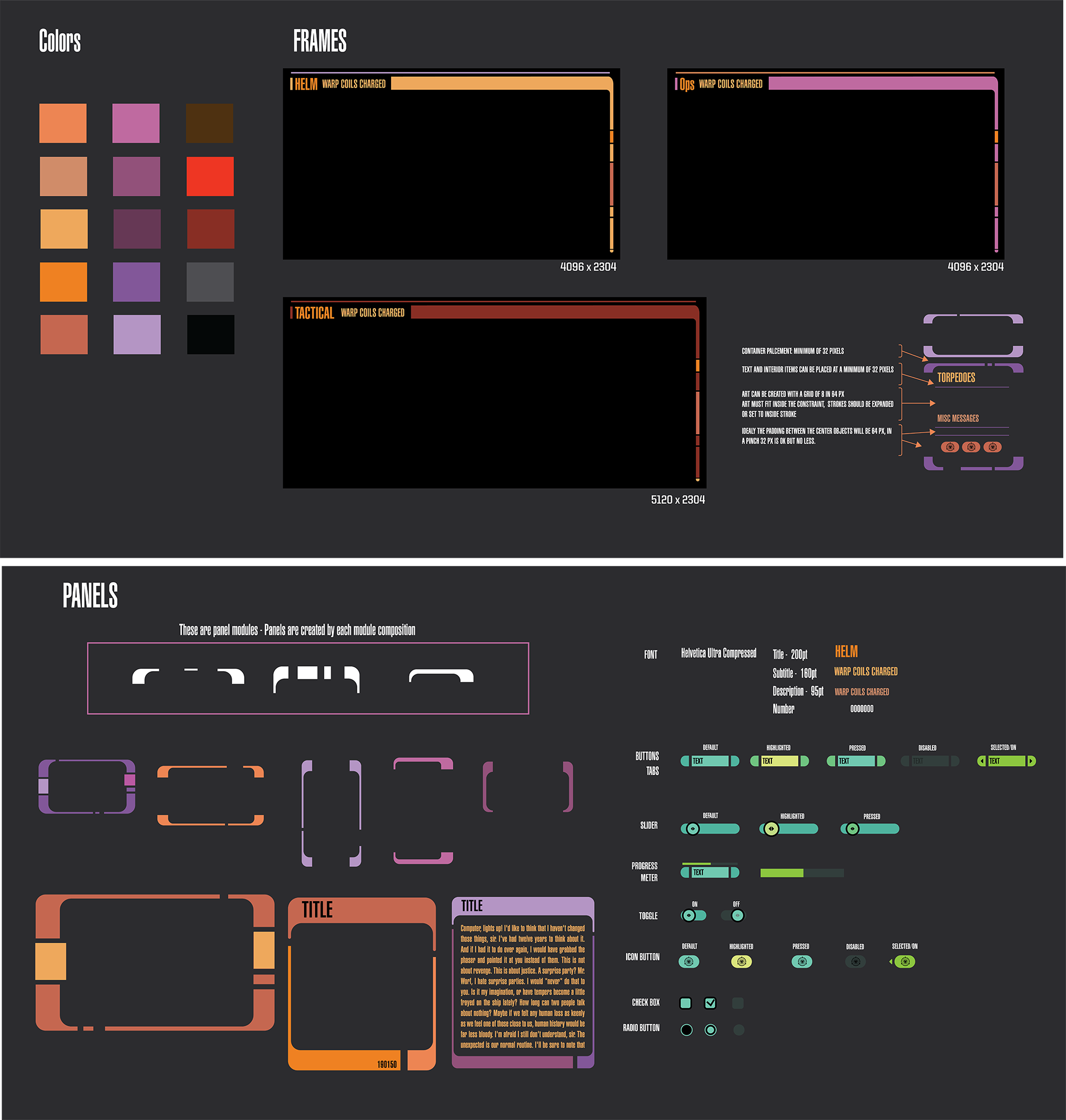
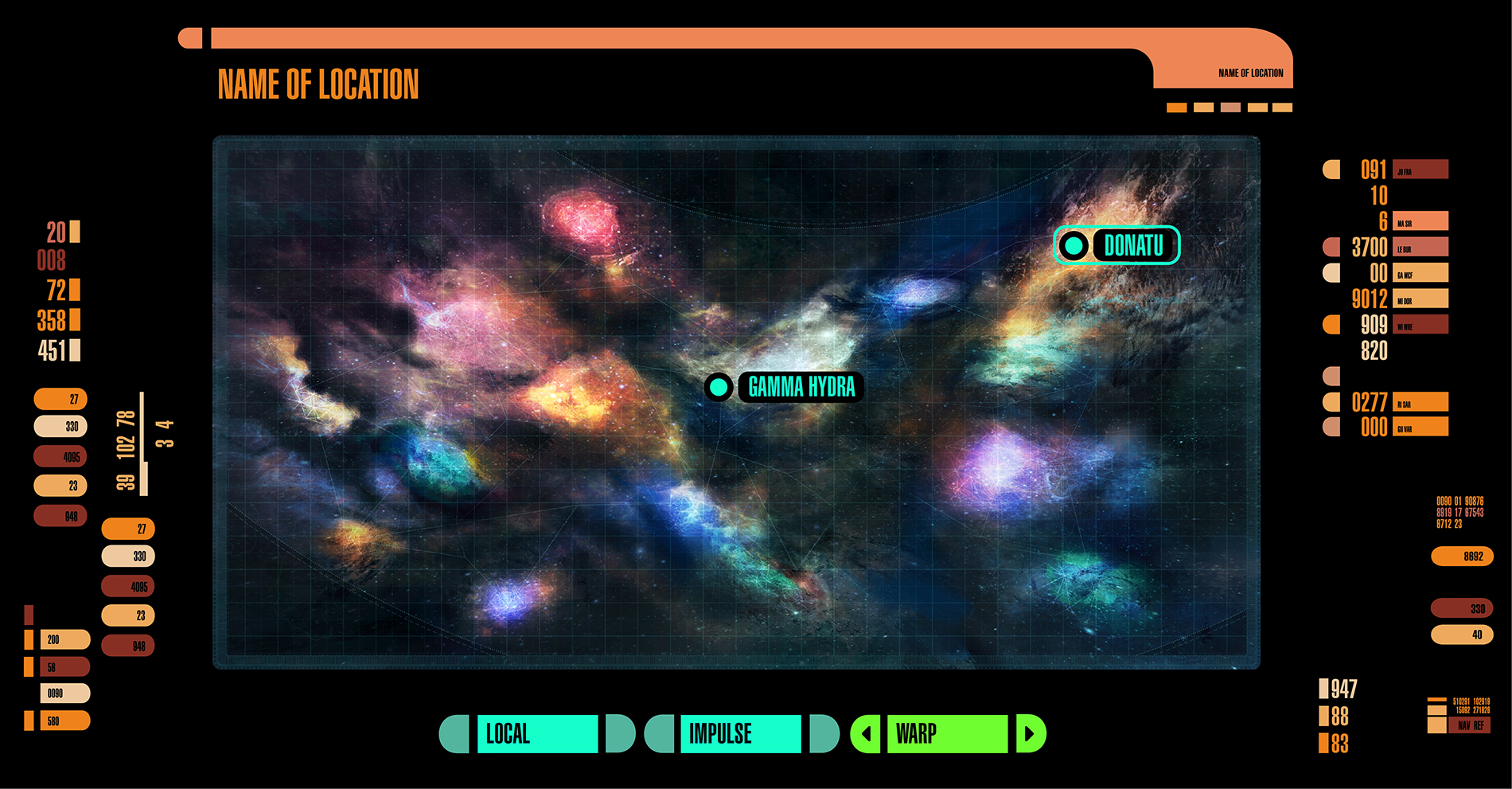
Fresh eye test & Iteration
- Group discussion after QA Test
- We had a lot of fresh eye test : internal testers, early fan service, CBS test
- biweekly fresh eyes would helped to develop on the correct paths and change paths if the route we took was not working.
The Original U.S.S Enterprise
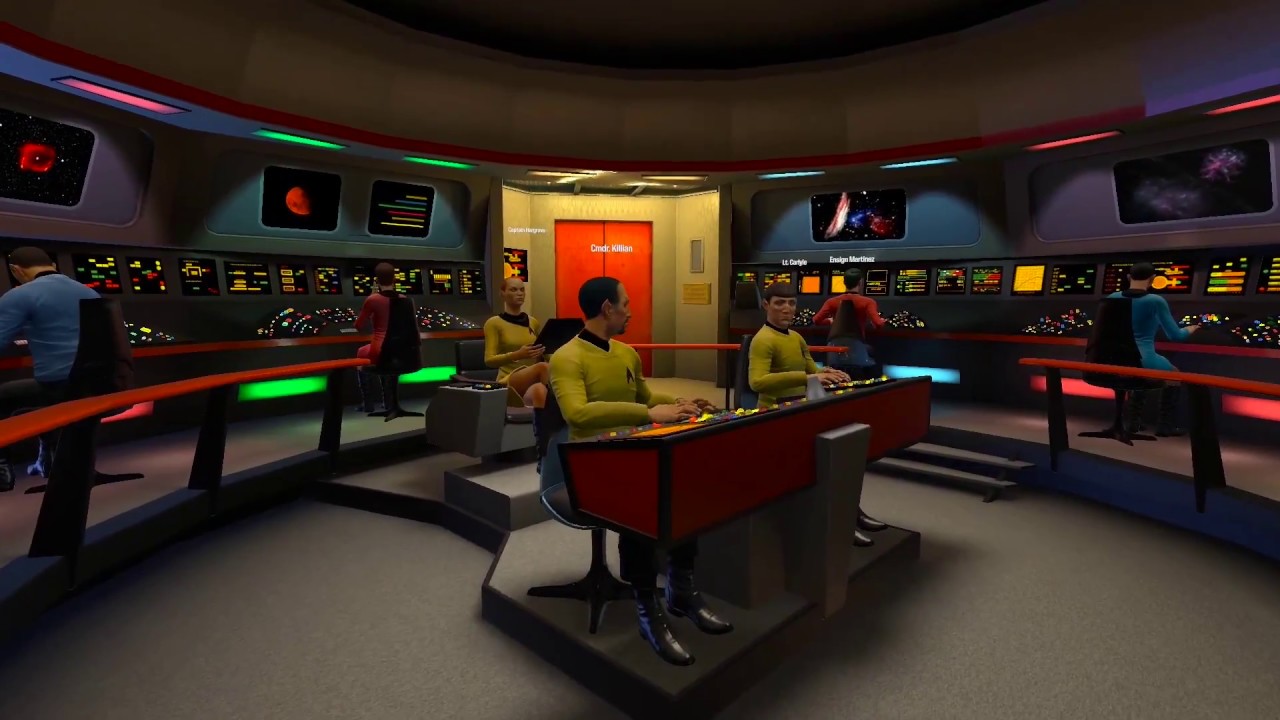
- The Original U.S.S EnterpriseGame was really mainly fo fan service. It needed extremely hard core usability skills At first we'd think changing ships wouldn’t result in a major difference in terms of actual gameplay, but it actually ended up feeling like a completely separate game for all intents and purposes. As the Tactical Officer the futuristic AR-esque panel was replaced by a slab with brightly colored buttons that looked more like pieces of candy than tools for deep space exploration. This was of course intentional as the Enterprise in Star Trek: Bridge Crew is designed to look exactly like it did in the original show — 60s cheesiness and all.
- Without help labels, TOS was very hard game to play